
How Does A House Move?
Cyclone Gabrielle Revisited
The devastating flooding caused by Cyclone Gabrielle in February 2023 brought unimaginable loss and destruction to the Hawke’s Bay region, including Esk Valley.
Among the extraordinary stories that emerged was the movement of a house—foundation and all—some 600 meters from its original location. While this event was a devastating reminder of the power of Mother Nature, it also raises fascinating engineering and scientific questions. How could such a massive structure, including its foundations, be dislodged and transported? Could materials like polystyrene void fillers have influenced the process?
This question sparked a discussion we had with an engineer just a few weeks ago. As a team deeply invested in understanding foundation dynamics, we were curious: would the QPOD system have made a difference in such extreme conditions? While we can’t definitively say it would have, exploring the principles behind the event offer good insights into how we, as New Zealanders, could avoid similar catastrophes in the future.
So, what happened?
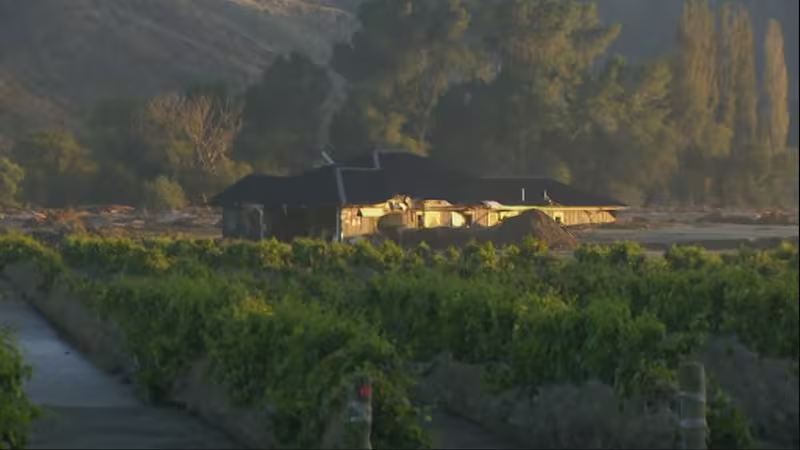
In case you missed the story, the house below, along with its foundations, was uprooted and moved by the floodwaters. The force of the water, combined with floating debris and compromised soil stability, created conditions that no conventional foundation system could withstand.
Witnesses described the event as “mayhem,” with the destructive flood reshaping the landscape and leaving a trail of devastation. This singular event underscores the importance of understanding how structures interact with extreme natural forces.
The Role of Floodwaters in Moving Structures
Floodwaters are an immensely powerful force, capable of reshaping entire landscapes. When water moves rapidly and with great volume, its energy can erode soil, destabilising foundations in its path, and generate enough buoyant force to lift structures.
The Esk Valley flooding brought a combination of high water levels, intense flow velocities, and debris-laden waters, creating the perfect formula for moving even the most well-built house.
Water’s buoyancy plays a crucial role in such scenarios. When the weight of a house is counteracted by the upward force of floodwaters, the effective weight of the structure decreases significantly. If the house’s foundations are not deeply anchored, or if the soil beneath is eroded, the entire structure could begin to float or slide.
Foundations and Their Behaviour in Floods
Foundations are designed to anchor a building to the ground and distribute its load evenly. Common foundation systems in New Zealand include:
- Raft Foundations: Large slabs of concrete designed to spread the load over a wide area.
- Piled Foundations: Deeply driven piles that anchor the structure to more stable soil or rock layers below.
In the case of a raft foundation, void fillers like polystyene or plastic void fillers like QPOD can be used to reduce the volume of concrete while maintaining strength. These fillers are lightweight and, in severe flooding, could add buoyancy to the structure. If soil erosion occurs or if water pressure lifts the raft, the entire slab can become mobile.
The Role of Polystyrene Void Fillers
When floodwaters surround a foundation with polystyrene fillers, the displacement of water can create enough upward force to lift the structure, particularly if the surrounding soil is compromised. If the soil beneath the foundation erodes, the filler’s buoyancy can exacerbate the house’s mobility, turning it into a floating slab. This phenomenon is rare and would require the perfect storm of factors: high water levels, rapid flow, and soil instability, like what was seen in Esk Valley during Cyclone Gabrielle in 2023.

Just some of the polystyrene mess created when installing building foundations., but beyond the mess, inconvenience and environmental damage will polystyrene predispose a foundation to floating any more so than another type of void former?
Would QPOD Have Made A Difference?
The QPOD system, designed made with recycled plastic and engineered for sustainability, offers unique properties that differ from traditional polystyrene-based void former systems. Its modular design provides excellent load distribution while maintaining structural integrity. Unlike polystyrene, QPOD’s material composition minimises buoyancy, reducing the likelihood of lifting under extreme flooding conditions.
However, in a scenario like Esk Valley’s, where the soil was completely eroded and water levels reached unprecedented heights, even QPOD foundations would face significant challenges. No foundation system is entirely immune to such catastrophic events.
Engineering Lessons from Esk Valley
The Esk Valley tragedy underscores several critical lessons for engineering and construction practices. First and foremost, flood-prone regions require foundations that prioritise resilience. Erosion-resistant landscaping, and drainage improvements can greatly reduce the vulnerability of structures. Foundations must also be designed to account for extreme events, not just average conditions.
Beyond material choices, collaboration with local communities and experts could help lead to more tailored solutions. Incorporating localised knowledge about soil conditions, water flow patterns, and historical flooding events into foundation designs can significantly improve their effectiveness. This collaborative approach could also extend to offering consultation services on sustainable building practices, ensuring homes are built with both resilience and sustainability in mind.
The need for proactive planning cannot be overstated. Events like the Esk Valley flooding remind us that resilience begins long before a crisis occurs. By focusing on prevention, engineering innovation, and community engagement, we can mitigate the devastating impacts of future disasters.
A Respectful Reflection
The movement of this house is a testament to the raw power of nature. While the engineering details are fascinating, it’s crucial to remember the human toll of Cyclone Gabrielle. Lives and homes were lost, and communities were forever changed. As we explore these events scientifically, we do so with deep respect for those who endured the tragedy that unfolded in February 2023, and beyond.
At the same time, stories like these remind us of the need for ongoing innovation in engineering and construction. By understanding how and why these events occur, we can build a safer and more resilient future, not just for Esk Valley but for communities around the world.